Tap Notes: Nothing Is Just a File
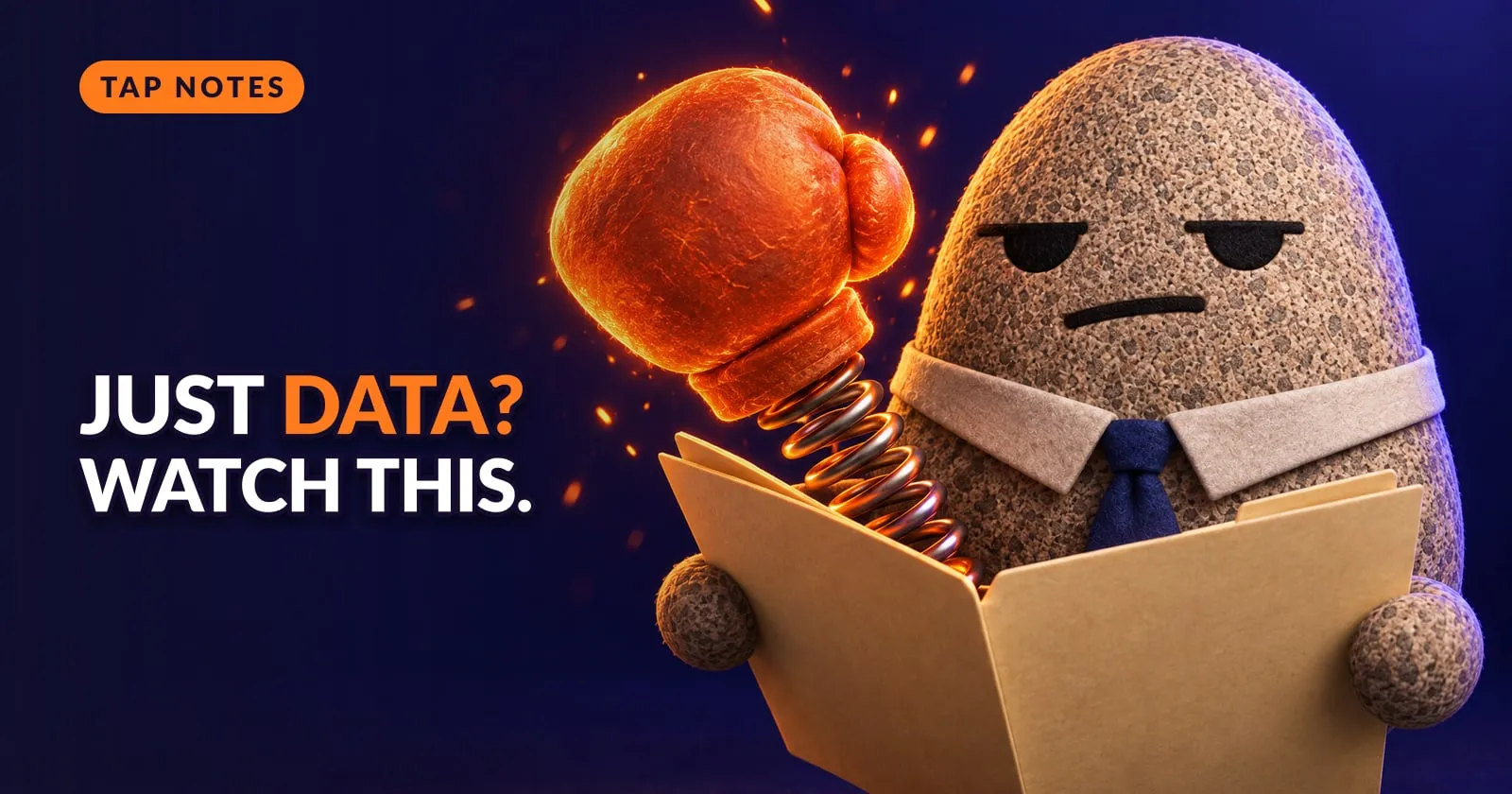
Every item today turns on the same gap: the label says one thing and the object does another. A “data” file executes. A “filesystem” is a vector database. A “clean room” contains a model trained on the thing it’s supposed to avoid. The useful question each time is what actually happens when the thing is touched.
Supply chain, with a twist of irony
Malicious litellm_init.pth in litellm 1.82.8 (March 2026)
Simon Willison covers the compromised LiteLLM release on PyPI. A credential stealer was hidden in base64 inside a .pth file, so installing the package was enough to trigger it, with no import needed. PyPI quarantined it within hours, and the trail leads back to an earlier compromise of Trivy, a security scanner used in LiteLLM’s CI.
Why it matters: Most Python developers don’t know .pth files can run code at install time. That makes pip install an execution event, not a download. The Trivy link is the part to sit with: the tool you added to catch problems was the way in. If your agents or CI install dependencies unattended, add a cool-down before pulling fresh releases, pin hashes, and consider doing installs in a throwaway environment. The window to catch a bad release was hours. The window to abuse stolen credentials is much longer.
Agents and the interfaces they actually need
How we built a virtual filesystem for our Assistant (April 2026)
Mintlify swapped per-session sandboxes for ChromaFs, a virtual filesystem that turns grep, cat, ls and find into queries against an existing Chroma vector database. Session creation dropped from about 46 seconds to about 100 milliseconds, and marginal compute per conversation went to zero.
Why it matters: Agents don’t need a filesystem. They need the commands they already know. The security detail is the best part: access control prunes the path tree before it’s built, so a forbidden file doesn’t return “permission denied.” It doesn’t exist. An agent can’t be prompt-injected into probing a path it can’t see. The caveat is that this works because the workload is read-only docs with an index already built. Once the agent needs to write, you’re back to sandboxes.
Agents don’t need a filesystem. They need the illusion of one.Post to X
let the code do the talking (March 2026)
Sunil Pai argues that LLMs are dissolving the old split between programmers, who issue procedures, and everyone else, who pick from pre-built menus. Using Cloudflare’s code mode as the example, he says models are often better at writing code against a stateful system than at working through bespoke tool-calling interfaces. The requirement underneath is a fast, isolated, capability-scoped sandbox.
Why it matters: The useful distinction is code as authoring versus code as interaction. Scaffolding a new app creates something a human now has to understand. Inhabiting an existing state machine keeps the environment legible. The thing to push on is the word “untrusted.” The code here is generated, so prompt injection becomes a code-execution channel, and a runtime with bindings to private data and an outbound path is a risk by construction. Capability scoping helps. How granular those capabilities are is where the real design work lives.
When the contamination is in the weights
Can coding agents relicense open source through a “clean room” implementation of code? (March 2026)
The maintainer of chardet released a 7.0.0 rewrite built with Claude Code and relicensed it MIT. The original author objected that this violates the LGPL, since the maintainer had deep exposure to the original code. The maintainer’s reply is to measure the output: JPlag showed under 1.3% similarity to prior versions. Willison points out the unresolved wrinkle, which is that Claude was very likely trained on chardet.
Why it matters: Traditional clean room works because you can verifiably quarantine humans from the original. You can’t quarantine a model from its training data, and an instruction like “don’t base anything on LGPL code” does nothing against weights. A low similarity score is real evidence about the output. It says nothing about structure the model memorized and paraphrased. The process the maintainer followed was sound: design doc first, tests before implementation, and an auditable plan file in the repo. Whoever funds the first serious commercial lawsuit over this will set the rule for every agentic rewrite after it.
A frontier model can’t be quarantined. The model is the contaminated team member.Post to X
Fresh from this week
Tailscale SSH: Investigation and remediation update
Tailscale published an update on an investigation into its SSH feature, covering a privilege issue where an authorized SSH user could escape their configured local permissions, along with the remediation.
Why it matters: The detail that matters is that the user was already allowed in and could still get more than they were granted. If you treat “authenticated” as “contained,” check the layer that enforces the second part. It’s also a good example of how to write up a serious vulnerability. I’m reading the full thing for that alone.
One more thing
I haven’t finished reading Hack Apocalypse Now yet. Paul Krugman, of all people, argues that AI-assisted vulnerability discovery could strain the internet within months. An economist’s take on the offense and defense asymmetry may be wrong in useful ways or right in uncomfortable ones. Either way, it’s worth reading.
Install is execution. Files are queries. Weights remember. 🪨